
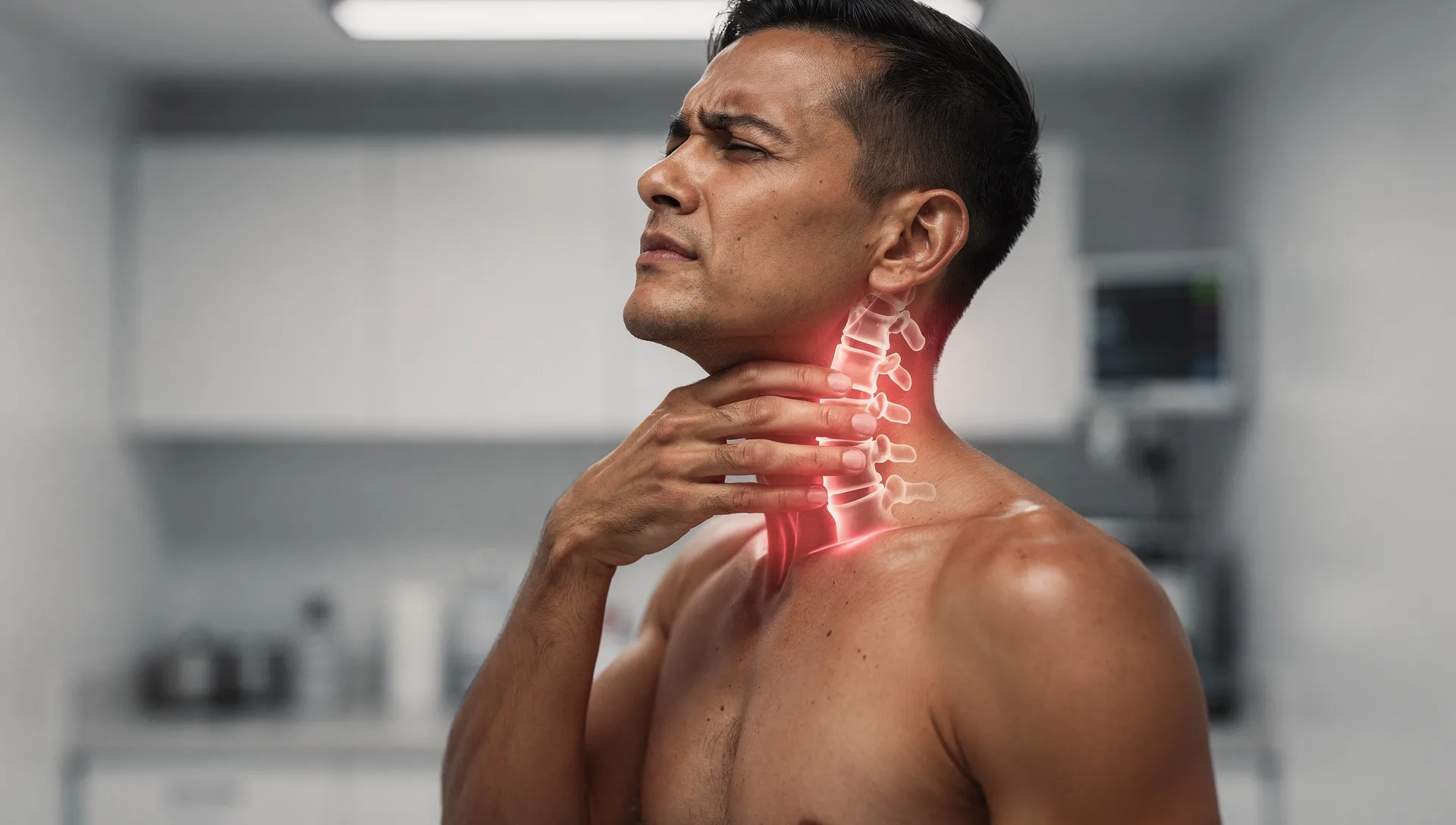
Understanding Neck Pain
The cervical spine — the seven vertebrae that make up your neck — is remarkably mobile, capable of rotating nearly 90 degrees in each direction and supporting the weight of the head (roughly 10–12 pounds) through every movement of the day. That combination of mobility and load-bearing responsibility makes it particularly vulnerable to injury and degeneration.
Neck pain is the fourth leading cause of disability globally, affecting roughly 50% of adults at some point in their lives. While occasional neck stiffness after sleeping in an awkward position is common and usually self-limiting, neck pain that persists for more than a week, recurs frequently, or radiates into the shoulders, arms, or hands warrants a thorough evaluation.
Muscle tension and postural strain are among the most common causes of neck pain today, driven largely by the hours most people spend with their heads tilted forward toward screens. For every inch the head moves forward of its neutral position, the effective load on the cervical spine increases by approximately 10 pounds — a phenomenon sometimes called "tech neck" or "forward head posture." Over time, this chronic stress leads to muscle fatigue, joint irritation, and disc degeneration.
Cervical disc herniation occurs when the soft inner material of a cervical disc pushes through the outer ring and presses on a nerve root — a condition called cervical radiculopathy. Symptoms typically include sharp or burning pain that radiates down the shoulder, arm, and into the hand, often accompanied by numbness, tingling, or weakness. The most common levels are C5-C6 and C6-C7, producing symptoms in the thumb and index finger (C6) or middle finger and forearm (C7).
Cervical stenosis — narrowing of the spinal canal or nerve root exit points — is more common with age and can compress either nerve roots (causing radiculopathy) or the spinal cord itself (myelopathy). Myelopathy can cause balance problems, clumsiness in the hands, and weakness in the legs, and requires careful evaluation to determine the appropriate level of intervention.
Whiplash and auto accident injuries cause cervical ligament sprains and facet joint damage that often do not appear on standard X-rays. Digital Motion X-Ray, available at our clinic, uniquely reveals dynamic cervical instability and ligament laxity that static imaging misses entirely.
How We Treat Neck Pain
Treatment begins with a complete cervical evaluation, including orthopedic and neurological testing, range-of-motion measurement, and digital X-ray imaging. When available, we review any existing MRI or CT studies to ensure we have a clear picture of the structural conditions involved.
Cervical chiropractic adjustments are highly effective for neck pain caused by joint restriction, facet irritation, and muscle tension. Gentle, precise manipulation restores normal cervical motion, reduces nerve irritation, and breaks the pain-spasm cycle. For patients uncomfortable with manual cervical adjustments, instrument-assisted and low-force techniques are available.
Cervical spinal decompression uses the DRX 9000 in cervical mode to create targeted negative pressure across specific cervical disc levels. This gently reduces disc bulge, decreases nerve root compression, and promotes disc rehydration — directly addressing the structural causes of radiculopathy and disc-related neck pain without surgery.
Physical therapy focuses on deep cervical flexor strengthening, postural correction, and scapular stabilization — the muscular foundation that supports the cervical spine. Patients also receive guidance on workstation ergonomics to reduce the postural drivers of recurrent neck pain.
Class IV laser therapy accelerates healing in the soft tissues surrounding the cervical spine, reduces inflammation, and provides pain relief for patients with persistent muscle involvement or recent soft-tissue injuries from accidents.
When to Seek Immediate Care
See a healthcare provider urgently if neck pain follows significant trauma (motor vehicle accident, sports impact, fall), if you experience progressive weakness or numbness in your arms or hands, if you have difficulty walking or maintaining balance, or if neck pain is accompanied by fever, severe headache, or jaw pain. These may indicate conditions requiring immediate medical attention beyond what chiropractic care alone can address.