
Understanding Arthritis
Arthritis is not a single disease — it is an umbrella term covering more than 100 conditions that affect joints, the surrounding tissue, and connective structures. At Central Illinois Spine, we focus on the two forms most amenable to conservative musculoskeletal care: osteoarthritis and spinal arthritis.
Osteoarthritis (OA) is by far the most common form, affecting tens of millions of Americans. It develops when the protective cartilage that cushions the ends of bones gradually breaks down, causing the joint surfaces to lose their smooth gliding ability. As cartilage thins and wears away, bones begin to rub more directly against one another, triggering inflammation, pain, and the formation of bony spurs (osteophytes). OA most frequently affects the spine, hips, knees, hands, and shoulders.
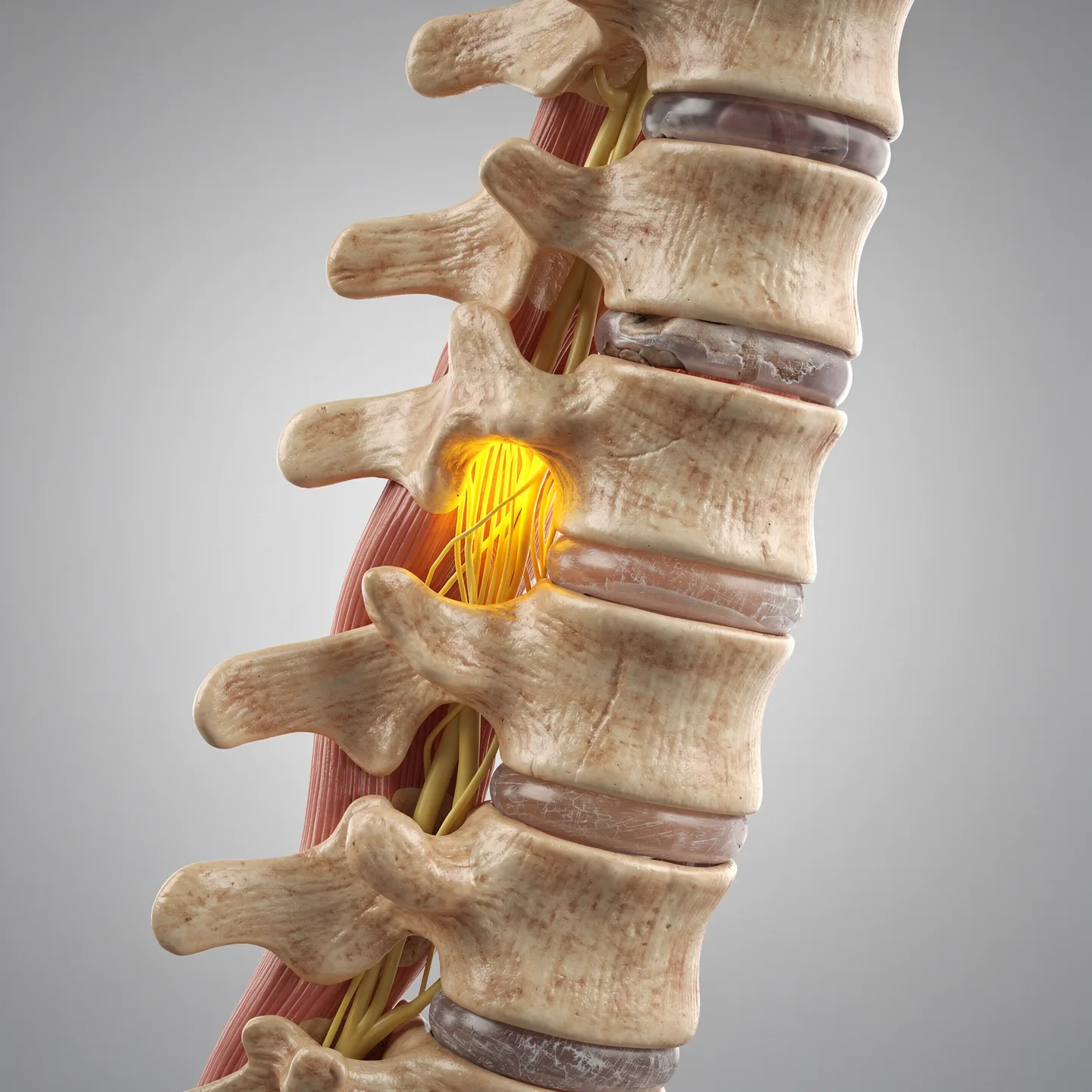
Spinal arthritis — also called facet joint arthritis or spondylosis — occurs when the small paired joints that link adjacent vertebrae degenerate. These facet joints rely on cartilage just like any other joint, and with age, repetitive stress, or prior injury, that cartilage breaks down. The result is localized back or neck stiffness, reduced spinal motion, and often nerve irritation from the narrowed joint spaces. Cervical (neck) and lumbar (lower back) regions are most commonly affected.
Rheumatoid arthritis (RA) — an autoimmune condition — is a separate category that primarily requires medical management by a rheumatologist. At Central Illinois Spine, our focus is the mechanical, musculoskeletal aspect of arthritis management. Patients with RA who also have mechanical joint dysfunction may benefit from certain conservative therapies, but we coordinate closely with their medical team in those cases.
Arthritis Symptoms We Treat
Arthritis presents differently depending on which joints are affected and how advanced the degeneration is. The most common symptoms our patients report include:
- Morning stiffness — joints that feel tight, swollen, or difficult to move upon waking, typically improving after 20–30 minutes of gentle activity
- Persistent joint aching — a deep, dull ache that worsens with prolonged activity or after sitting for extended periods
- Reduced range of motion — difficulty reaching overhead, turning the neck fully, bending forward, or performing everyday tasks without restriction
- Grinding or crepitus — a grating, clicking, or popping sensation inside the joint with movement, caused by roughened cartilage surfaces
- Neck and back pain from spinal arthritis — localized pain along the spine, often worse with extension movements, sometimes accompanied by radiating discomfort into the arms or legs from compressed nerve roots
If these symptoms sound familiar, a comprehensive evaluation at Central Illinois Spine can confirm the diagnosis — including digital X-ray imaging to assess joint space narrowing and bony changes — and map out a personalized treatment plan.
How Chiropractic Helps Arthritis
Chiropractic care is not a cure for arthritis, and our doctors are transparent about that from the first visit. What chiropractic can do is meaningfully manage symptoms, restore as much joint function as possible, and help slow the degenerative progression that accelerates when joints are left stiff and immobile.
Gentle chiropractic adjustments restore normal motion to joints that have become restricted by arthritic changes. When a joint stops moving through its full range, the cartilage inside loses its nutrient supply — cartilage has no blood supply and depends on fluid movement (synovial fluid diffusion) for nutrition. Restoring movement helps maintain this nutrient flow and reduces the rate of further degeneration. Adjustments also reduce nerve irritation caused by swollen, compressed facet joints along the spine, providing measurable pain relief.
Our board-certified chiropractors select adjusting techniques appropriate for each patient's degree of arthritis. For patients with significant joint degeneration, low-force instrument-assisted techniques or gentle mobilization replace traditional high-velocity manipulation — ensuring comfort and safety while still achieving therapeutic joint movement.
Beyond pain relief, regular chiropractic care helps arthritis patients maintain the functional independence that matters most: getting up from a chair without difficulty, turning to back out of a driveway, lifting grandchildren, walking without a limp. These daily-life goals guide our treatment planning at every stage.
Physical Therapy for Arthritis
Physical therapy is an essential complement to chiropractic care for arthritis patients. The muscles surrounding an arthritic joint act as its dynamic support system — when those muscles are strong and flexible, they absorb load that would otherwise be transmitted directly through the damaged joint surface. Weakness, on the other hand, accelerates cartilage breakdown and worsens pain.
Our physical therapy team designs progressive strengthening programs targeting the muscles most critical for each patient's affected joints. For knee and hip osteoarthritis, this means quadriceps, hamstring, and hip abductor strengthening. For spinal arthritis, core stabilization exercises that reduce compressive forces on the facet joints are the priority. Every program is graded — starting gently and building as tolerance improves — so patients are never pushed into a flare.
Flexibility work is equally important. Tight muscles and restricted joint capsules increase the compressive forces inside arthritic joints. Targeted stretching routines restore length to chronically shortened tissues and give the joint more room to move without pain. We also incorporate therapeutic stretching modalities and, where appropriate, guidance on aquatic exercise concepts — water-based movement dramatically reduces joint load while maintaining the cardiovascular and muscular benefits of exercise, making it ideal for patients who find land-based activity too painful.
Class IV Laser Therapy for Arthritis
Class IV laser therapy — also called photobiomodulation — is one of the most effective tools available for chronic arthritis pain, and it is a core component of our arthritis treatment program at Central Illinois Spine.
High-powered therapeutic laser energy penetrates deep into joint tissues, where it triggers a cascade of cellular responses: increased ATP (cellular energy) production, reduced pro-inflammatory cytokine activity, accelerated tissue repair, and enhanced circulation. For arthritic joints, this translates to meaningful reductions in swelling and inflammation, less pain with movement, and improved healing of the soft tissues that surround and support the joint.
Unlike medications that mask pain systemically, laser therapy works at the tissue level where the problem actually exists. Treatments are painless — patients typically feel a gentle warmth over the treated area — and sessions last 8–12 minutes per joint. Most patients with chronic arthritis notice significant improvement after 6–10 sessions. Class IV laser is particularly effective when combined with chiropractic adjustments and PT, as the reduced inflammation creates an optimal environment for joint mobilization and exercise.
With over 20 years serving Bloomington-Normal and all of McLean County, Central Illinois Spine has developed an integrated, proven approach to arthritis management. Our three board-certified chiropractic physicians, in-house physical therapy team, and Class IV laser technology work together under one roof — meaning your care is coordinated, consistent, and built around your specific joints, lifestyle, and goals. We believe every arthritis patient deserves a drug-free path to staying active.