
Understanding Migraines and Cervicogenic Headaches
Headaches affect nearly everyone at some point, but for millions of Americans, they are a recurring, debilitating presence that disrupts work, relationships, and daily life. At Central Illinois Spine, we treat the full spectrum of headache disorders — and a key focus is identifying when the cervical spine is the true driver of head pain.
Migraines are a complex neurological and vascular condition characterized by intense, often one-sided throbbing pain that can last hours to days. They frequently come with accompanying symptoms such as nausea, vomiting, and heightened sensitivity to light and sound. Many migraine sufferers experience an aura — visual disturbances, tingling, or other neurological warning signs — in the minutes before a migraine begins. Migraines can be triggered by hormonal fluctuations, dietary factors, sleep disruption, stress, and — critically — cervical spine dysfunction.
Tension headaches are the most common headache type, typically presenting as a dull, pressure-like pain that wraps around the head like a band. They are closely tied to muscle tension in the neck, shoulders, and upper back — areas directly influenced by spinal alignment and posture. Prolonged sitting, screen time, and forward head posture are major contributors.
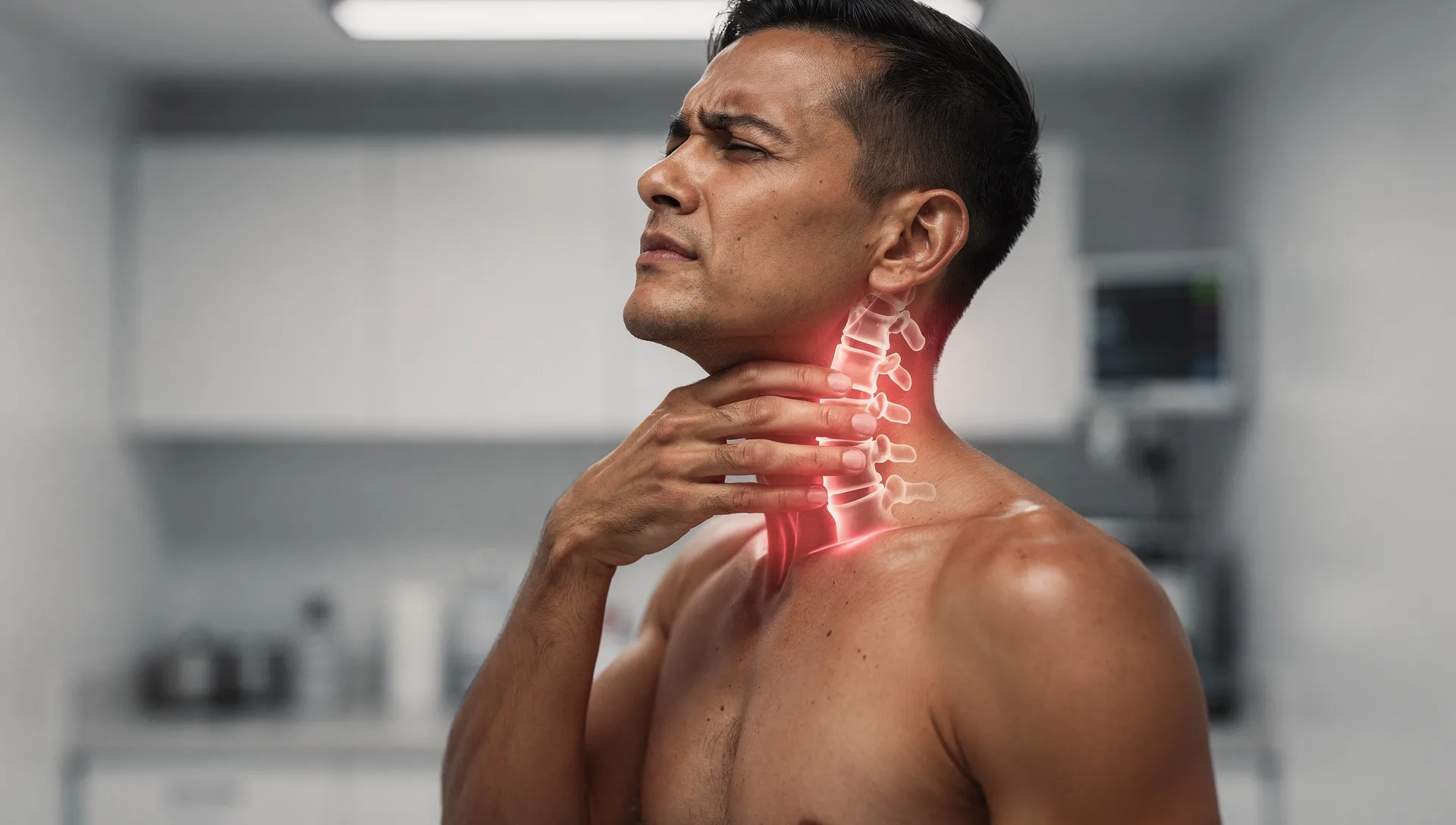
Cervicogenic headaches originate directly from dysfunction in the cervical spine and are among the most undertreated and misdiagnosed headache types. The upper cervical vertebrae — C1, C2, and C3 — share nerve pathways with the head and face. When these segments are misaligned, restricted, or inflamed, they can refer pain into the base of the skull, temples, and behind the eyes in patterns nearly indistinguishable from migraines. This is a key fact: upper cervical dysfunction at C1–C3 can trigger migraine-like symptoms that respond dramatically to chiropractic care rather than medication.
Types of Headaches We Treat
Central Illinois Spine evaluates and treats all common headache types, including:
- Tension headaches — driven by muscle tightness in the cervical and suboccipital muscles
- Cervicogenic headaches — arising from joint restriction, misalignment, or inflammation in the upper cervical spine
- Migraines — including those with and without aura, and migraines with a cervical component
- Post-concussion headaches — lingering head pain and cervical instability following a head injury or whiplash
- Occipital neuralgia — irritation of the occipital nerves causing sharp, shooting pain from the base of the skull into the scalp
How Chiropractic Helps Migraines
Chiropractic care — specifically upper cervical adjustments — is one of the most evidence-supported non-pharmacological treatments for migraine and headache disorders. By restoring proper motion to restricted cervical joints, adjustments reduce the nerve irritation and muscle tension that act as powerful migraine triggers. When the C1–C3 segments move freely and symmetrically, the suboccipital muscles relax, pressure on the greater occipital nerve decreases, and the neurological environment that generates migraines becomes far less hospitable.
Research consistently supports this approach. Multiple clinical trials and systematic reviews have found that spinal manipulation reduces both migraine frequency and intensity, often to a degree comparable to common preventive medications — without their side effects. A landmark study published in the Journal of Manipulative and Physiological Therapeutics found that chiropractic patients experienced significant reductions in migraine days per month following a course of cervical care.
We also address forward head posture — commonly called "text neck" — as a major contributing factor to both cervicogenic headaches and migraines. For every inch the head shifts forward from its neutral position over the shoulders, the effective weight on the cervical spine increases by approximately 10 pounds. This chronic overload creates the muscle tension and joint compression that perpetuate headache cycles. Correcting forward head posture is a cornerstone of our long-term headache management strategy.
Physical Therapy for Headache Relief
Physical therapy is an essential complement to chiropractic care in our headache treatment program. Our licensed physical therapists target the muscular and postural drivers of head pain through:
- Cervical strengthening — rebuilding the endurance of deep neck muscles that support proper head position
- Postural correction — retraining movement patterns that place chronic load on the upper cervical spine
- Deep neck flexor rehabilitation — restoring the function of the longus colli and longus capitis muscles, which are consistently weak in chronic headache sufferers
- Trigger point release — manual therapy targeting myofascial trigger points in the suboccipital, trapezius, and sternocleidomastoid muscles that commonly refer pain into the head
This combined chiropractic-plus-physical therapy approach addresses both the structural and muscular contributors to headaches, producing more durable results than either modality alone.
Reducing Medication Dependence
One of the most meaningful outcomes we see in headache patients is a reduction — or complete elimination — of reliance on pain medication. Many chronic migraine sufferers have been taking triptans, NSAIDs, or other analgesics for years, often experiencing diminishing returns and the well-documented phenomenon of medication overuse headache (MOH), where the frequent use of pain relievers paradoxically increases headache frequency.
Regular chiropractic care addresses the underlying cervical dysfunction that drives recurrent headaches. As the structural cause is resolved, patients find they need pain medication less often — and in many cases, not at all. This drug-free outcome is safer for long-term health, avoids gastrointestinal and cardiovascular risks associated with chronic NSAID use, and removes the MOH cycle entirely.
At Central Illinois Spine, we are committed to treating the cause of your headaches, not just the symptom. Our integrated team — three chiropractic physicians and licensed physical therapists working under one roof — evaluates each patient comprehensively and builds a personalized care plan designed for lasting relief. We have been serving Bloomington-Normal and McLean County since 2005, helping patients reclaim headache-free days through evidence-based, drug-free care.