
Understanding Herniated Discs
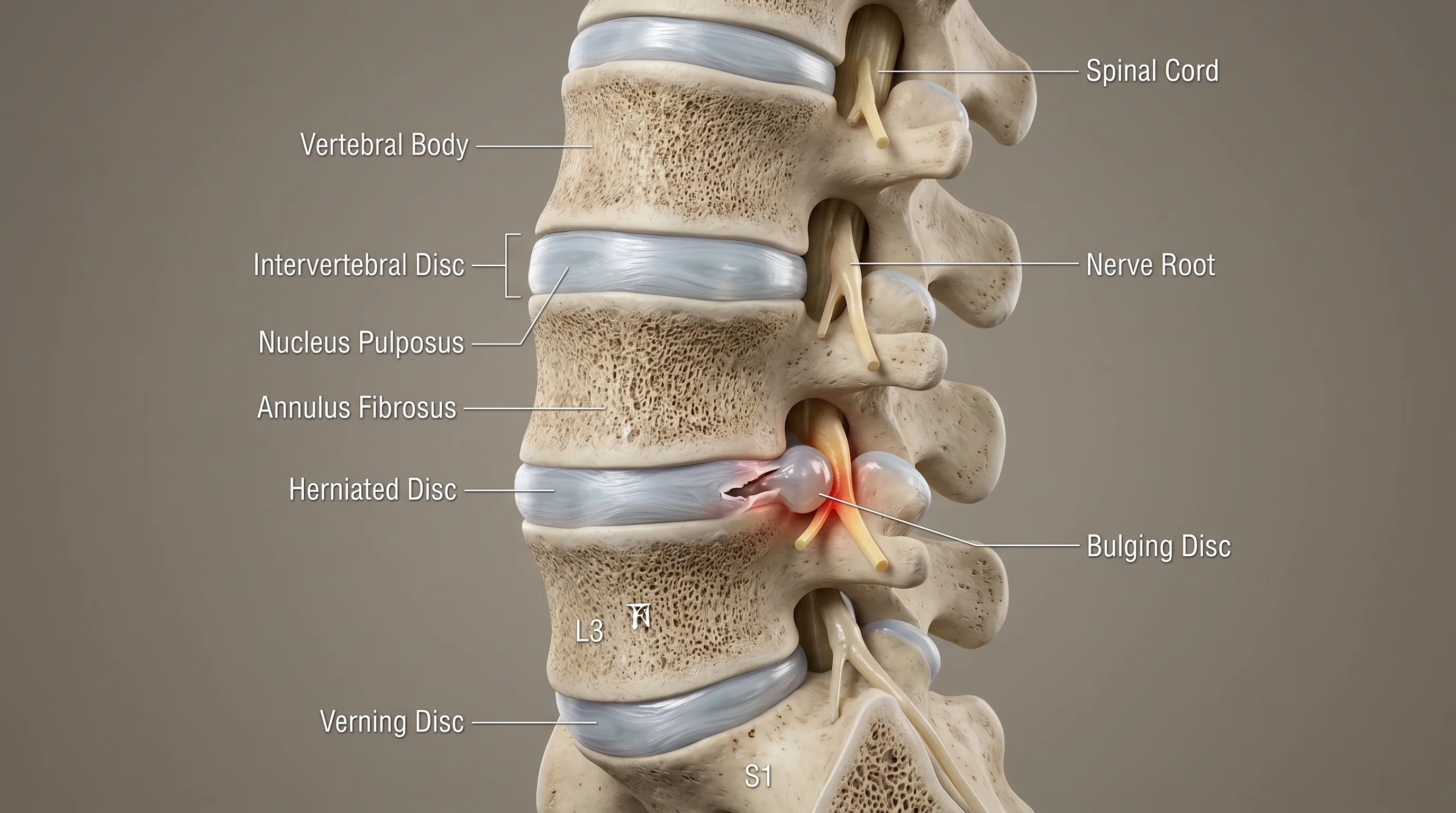
Your spine is cushioned by 23 intervertebral discs, each acting as a shock absorber between the bony vertebrae. Every disc has two layers: a tough, fibrous outer ring called the annulus fibrosus and a soft, gel-like center called the nucleus pulposus. When the annulus develops a tear — whether from sudden injury, repetitive strain, or gradual wear — the nucleus pulposus can push through. That's a herniated disc.
The herniated material doesn't just cause local inflammation in the disc itself. When it presses on the spinal nerve roots branching out from the spinal cord, it can produce pain, numbness, tingling, or weakness that travels far from the source. This is called radiculopathy — and it's why a lower back disc problem can send shooting pain all the way down your leg.
Lumbar vs. Cervical Disc Herniations
Herniated discs can occur anywhere along the spine, but two regions are by far the most common:
- Lumbar herniation (lower back): Most often at L4–L5 or L5–S1. Symptoms include lower back pain, sciatica (pain radiating into the buttock, thigh, and leg), calf weakness, and foot drop in severe cases.
- Cervical herniation (neck): Most often at C5–C6 or C6–C7. Symptoms include neck pain, shoulder blade pain, arm pain or numbness radiating into the fingers, and grip weakness.
Thoracic (mid-back) herniations are less common but do occur, particularly in people who have experienced significant trauma or have underlying disc degeneration.
What Causes a Disc to Herniate?
Disc herniations rarely happen overnight. Most develop from a combination of age-related disc dehydration and accumulated mechanical stress. As discs lose water content over time, the annulus becomes less supple and more prone to cracking. A single awkward lift, a car accident, or even a forceful sneeze can be the final event that causes an already-compromised disc to herniate. Risk factors include sedentary lifestyle, prolonged sitting, smoking (which reduces disc nutrition), excess body weight, and repetitive lifting or twisting occupations.
How We Treat Herniated Discs
At Central Illinois Spine, we approach herniated disc treatment with a multi-modal protocol built around three core therapies that work synergistically. Our goal is not simply pain relief — it's genuine disc healing and long-term spinal health.
Spinal Decompression — DRX 9000
The DRX 9000 is the flagship of our herniated disc treatment program. This FDA-cleared, computer-controlled decompression table applies precise axial traction forces to the lumbar or cervical spine in a carefully programmed cycle. Unlike simple traction, the DRX 9000 alternates between distraction and relaxation phases, which prevents the paraspinal muscles from reflexively guarding against the pull.
The result is a measurable drop in intradiscal pressure — often into negative territory. This negative pressure creates a vacuum effect that can draw herniated nuclear material back toward the center of the disc and simultaneously pulls in oxygen, water, and nutrients that the avascular disc desperately needs to heal. Central Illinois Spine operates six DRX 9000 units — more than any other clinic in central Illinois — which means you never wait weeks for your next session.
Chiropractic Adjustments
Spinal misalignments (subluxations) often accompany disc herniations or develop as a result of the guarded posture patients adopt to avoid pain. Chiropractic adjustments restore proper segmental motion and alignment, reducing mechanical stress on the affected disc and removing interference from the nervous system. Our doctors use low-force, instrument-assisted, and flexion-distraction techniques that are appropriate even for acutely painful presentations.
Physical Therapy & Corrective Exercise
Decompression and chiropractic relieve the pressure and restore alignment — but the muscles that support your spine must also be rehabilitated. Our physical therapy program targets the deep core stabilizers (transverse abdominis, multifidus) and hip musculature that protect the lumbar spine, as well as the deep cervical flexors for neck cases. Stronger support musculature significantly reduces the risk of re-herniation.
Class IV Laser Therapy
For patients with significant inflammation and nerve irritation, Class IV laser therapy delivers photobiomodulation energy deep into the tissue to accelerate cellular repair, reduce pro-inflammatory cytokines, and provide analgesic relief. It is a painless, drug-free complement to decompression that many patients find noticeably reduces their pain after the first few sessions.
We work with most major insurance plans. Call us at (309) 268-9000 and we'll verify your benefits before your first visit — no surprises.