
What Is Sciatica?
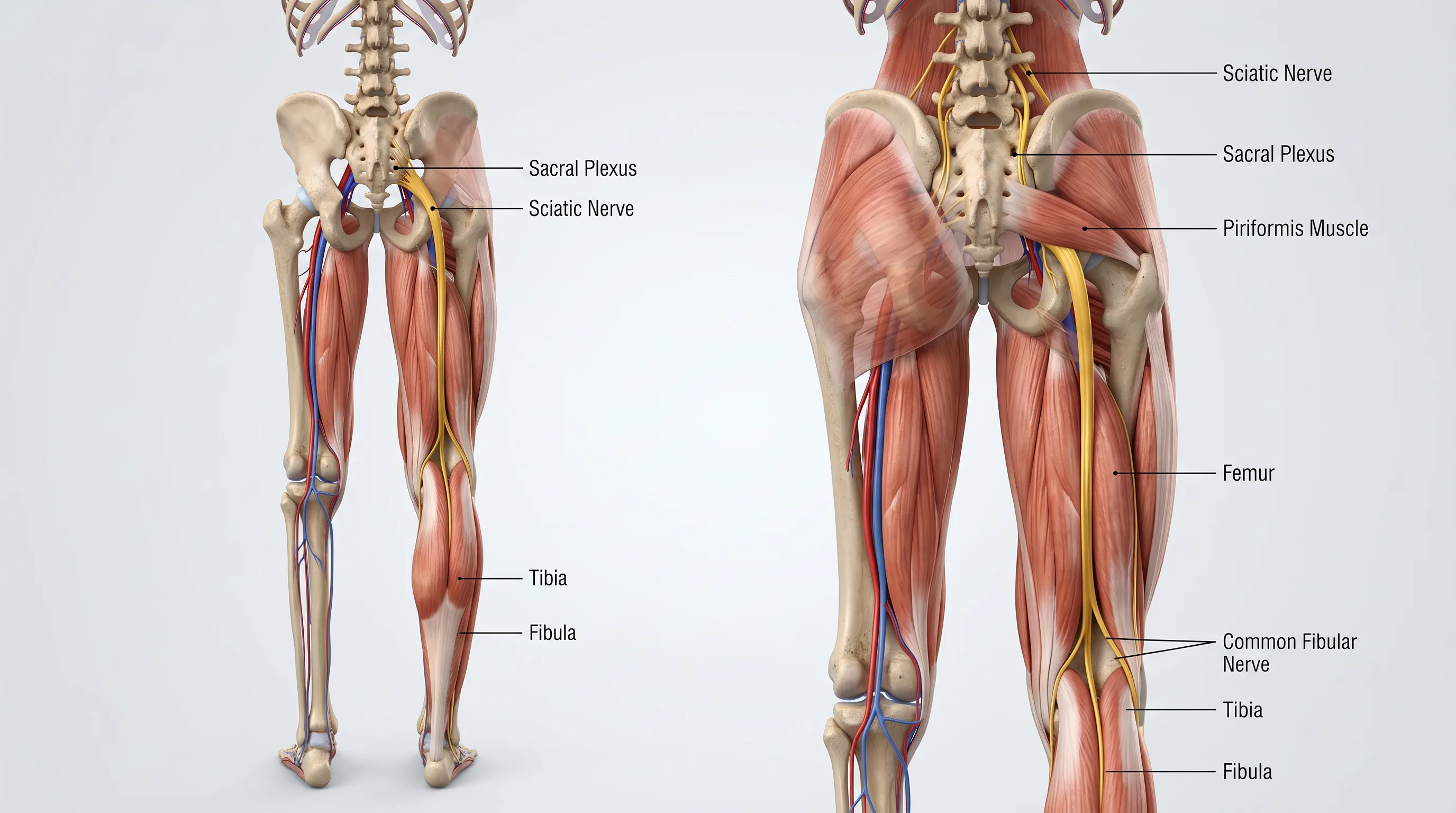
The sciatic nerve is the longest and widest nerve in the human body. It forms from the nerve roots of L4, L5, S1, S2, and S3 in the lower lumbar spine, travels through the buttock via the sciatic notch, and extends down the back of each leg to the foot. When any of those nerve roots are compressed or irritated — or when the nerve itself is impinged in the buttock by the piriformis muscle — the result is sciatica.
Sciatica is not a diagnosis on its own; it is a symptom of an underlying structural problem. Identifying that underlying cause is essential for choosing the most effective treatment. The two most common structural causes are lumbar disc herniation (most often at L4-L5 or L5-S1) and piriformis syndrome. Less common causes include degenerative disc disease, spinal stenosis, and spondylolisthesis.
Sciatica affects an estimated 10–40% of the population at some point in their lives. Men between 40 and 60 years old are most commonly affected, but it can occur at any age. Common risk factors include prolonged sitting, heavy lifting with poor mechanics, obesity, pregnancy, and prior lumbar injury.
Symptoms of Sciatica
The hallmark symptom is pain that radiates from the lower back or buttock down the back or outer side of one leg — rarely both legs simultaneously. The pain is often described as sharp, burning, electric, or shooting. Other common symptoms include:
- Numbness or tingling in the leg, calf, or foot along the nerve's pathway
- Weakness in the affected leg — difficulty raising the foot (foot drop) in L4-L5 herniations
- Pain worsening with sitting, particularly on firm surfaces or during long car rides
- Pain relief when walking or lying down (opposite of spinal stenosis, which typically worsens with standing and walking)
- Increased pain with coughing, sneezing, or bearing down due to increased intradiscal pressure
Symptoms that warrant urgent evaluation include sciatica in both legs simultaneously, loss of bowel or bladder control, saddle anesthesia (numbness in the inner thighs and groin), and rapidly worsening weakness. These may indicate cauda equina syndrome, a rare but serious emergency.
Why Spinal Decompression Is Often the Best Treatment for Sciatica
For disc-related sciatica, the mechanism of injury is mechanical — a disc pressing on a nerve. Surgery removes or repositions that disc. Non-surgical spinal decompression with the DRX 9000 achieves a similar goal through a different mechanism: by creating targeted negative intradiscal pressure at the specific herniated level, decompression gently pulls the disc material away from the nerve root, reduces intradiscal pressure, decreases nerve inflammation, and promotes nutrient flow into the disc that supports natural healing.
Central Illinois Spine operates six DRX 9000 machines — more than any other clinic in central Illinois. This means patients can schedule frequent sessions, which is important because sciatica treatment protocols typically require 20–28 sessions over 6–8 weeks for optimal results. The frequency advantage translates directly to faster relief and better outcomes.
Our Integrated Sciatica Treatment Protocol
Spinal decompression sessions on the DRX 9000 are typically the centerpiece of disc-related sciatica treatment. Chiropractic adjustments complement decompression by restoring normal segmental motion and correcting biomechanical factors that contribute to nerve compression. Physical therapy focuses on core stabilization and hip flexibility to reduce recurrence risk. For piriformis syndrome, targeted soft-tissue work, stretching protocols, and muscle activation exercises are prioritized. Class IV laser therapy accelerates healing in the nerve and surrounding soft tissues, particularly for patients with significant inflammation.