
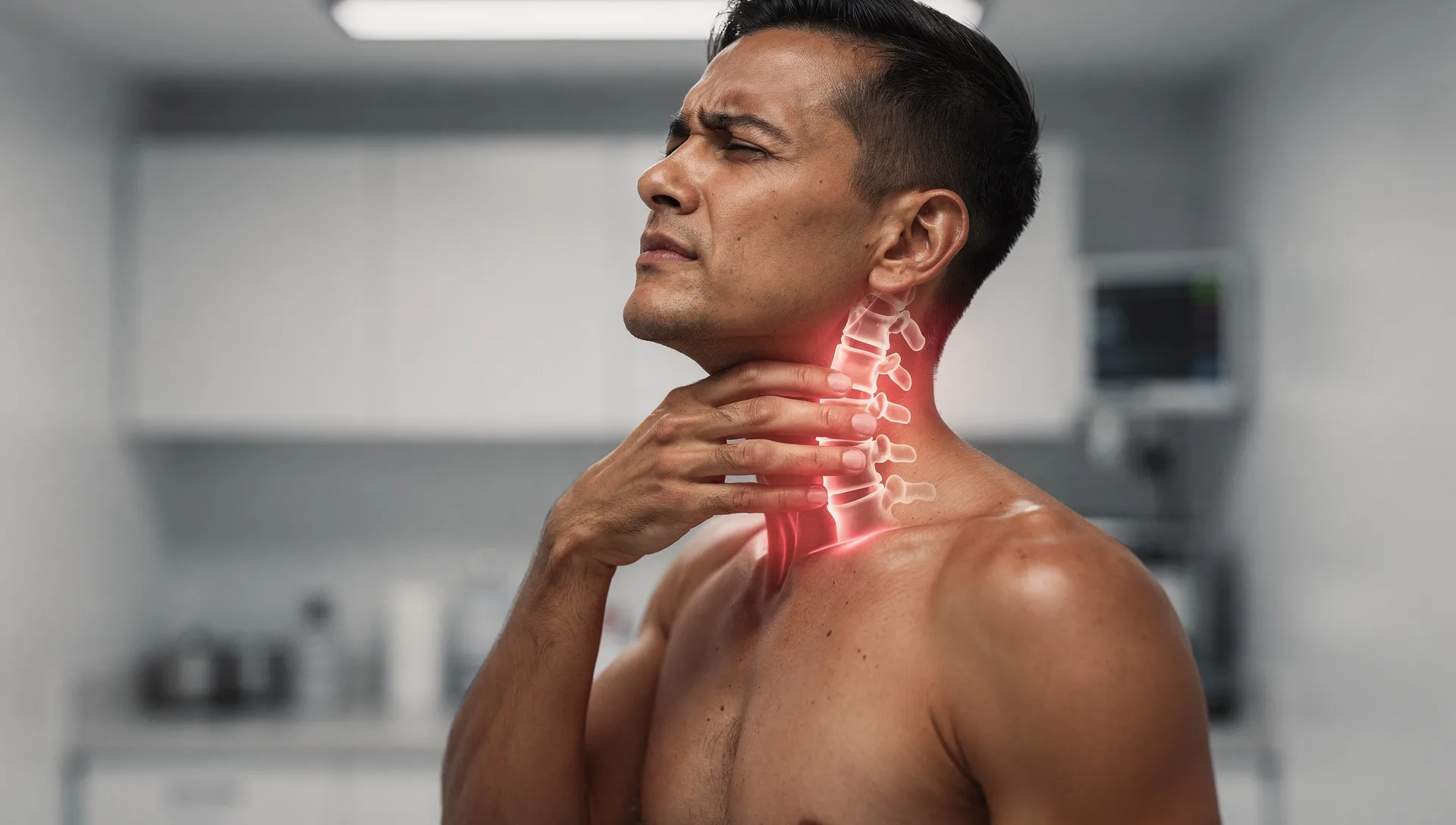
Headaches That Chiropractic Can Help
Not every headache is the same, and not every headache is a chiropractic case. Our doctors take a careful history and physical examination to determine whether your headaches have a musculoskeletal origin — and whether conservative spinal care is likely to help. The three types most responsive to chiropractic treatment are:
Tension-Type Headaches
Tension headaches are the most common type of headache, affecting an estimated 30–78% of the population at some point in their lives. They typically produce a bilateral pressure or band-like tightness around the head, often described as feeling like a vice or tight hat. The pain is usually mild to moderate, not made worse by routine physical activity, and not accompanied by nausea.
The underlying driver is sustained muscular tension in the neck, shoulders, and scalp — particularly the trapezius, sternocleidomastoid, and suboccipital muscles. Forward head posture is the most common structural contributor: for every inch the head migrates forward of the shoulder line, the effective mechanical load on the cervical spine approximately doubles. With many people spending 8+ hours per day at screens, forward head posture has become epidemic — and tension headaches follow.
Chiropractic adjustments to the cervical and thoracic spine restore proper joint mobility and reduce the reflexive muscular tension that cervical fixations generate. Soft tissue work releases trigger points in the suboccipital muscles and upper trapezius that commonly refer pain to the head.
Cervicogenic Headaches
Cervicogenic headache is a referred pain syndrome — the pain originates in the cervical spine but is felt in the head. The upper cervical segments (C1–C3) share neurological connections with the trigeminal nerve through the trigeminocervical nucleus, which is why dysfunction at these levels is perceived as head pain.
Cervicogenic headaches typically begin at the base of the skull or upper neck and radiate forward to the forehead, temple, or behind one eye. They are usually one-sided, provoked by neck movement or sustained awkward postures, and accompanied by restricted range of motion. They are frequently misdiagnosed as migraines.
This headache type responds particularly well to chiropractic care — in fact, manual therapy targeting the upper cervical joints is considered a first-line evidence-based treatment for cervicogenic headache. Our doctors are experienced in the precision adjustments needed at C0–C1 and C2–C3 that can produce dramatic, rapid relief in these cases.
Migraines with a Cervical Component
Migraine is a complex neurological condition with a genetic basis and involves cortical spreading depression, trigeminal nerve activation, and inflammatory cascades. Chiropractic is not a standalone treatment for all migraines. However, many migraine sufferers have a significant cervical trigger — neck stiffness and upper cervical joint restriction that lowers the threshold for attack initiation or worsens the severity of active migraines.
For these patients, chiropractic care targeting the cervical spine can reduce migraine frequency and potentially lower medication requirements. Multiple randomized controlled trials have documented the efficacy of cervical spinal manipulation for migraine prophylaxis. We will always conduct a thorough evaluation and work collaboratively with your neurologist or primary care provider to ensure your care plan is safe and appropriate.
When Headaches Are Not a Chiropractic Case
It's important to identify red-flag headaches that require immediate medical evaluation rather than chiropractic care. Seek urgent medical attention for headaches that are:
- "Thunderclap" headaches — sudden onset, severe, reaching maximum intensity within seconds (possible subarachnoid hemorrhage)
- Associated with fever, stiff neck, and light sensitivity (possible meningitis)
- Occurring after head trauma
- Progressive and worsening over weeks
- Accompanied by neurological symptoms: confusion, vision loss, facial droop, limb weakness
- New headaches in patients over 50 (possible temporal arteritis)
If your headaches match any of these descriptions, please see your medical doctor or go to urgent care before scheduling with us. Patient safety is always our first priority.
Our Headache Treatment Approach
Cervical Chiropractic Adjustments
Precise, targeted adjustments to the cervical and upper thoracic spine restore joint mobility, reduce nerve irritation, and break the reflexive muscle guarding cycles that sustain tension. Our doctors are proficient in multiple adjustment techniques — including high-velocity low-amplitude (HVLA) manipulation, instrument-assisted adjusting (Activator), and flexion-distraction — to ensure the approach is appropriate for your comfort level and clinical picture.
Soft Tissue and Trigger Point Therapy
Myofascial trigger points in the suboccipital muscles, upper trapezius, sternocleidomastoid, and temporalis are common contributors to headache pain. Our treatment includes manual trigger point release, instrument-assisted soft tissue mobilization (IASTM), and targeted massage to deactivate these pain generators. Many patients experience immediate reduction in headache intensity following soft tissue work.
Postural Correction and Ergonomic Guidance
Correcting the structural driver — forward head posture, rounded shoulders, poor workstation setup — is essential for long-term headache resolution. We assess your posture, prescribe corrective exercises to strengthen the deep cervical flexors and thoracic extensors, and provide practical guidance on screen positioning, pillow selection, and daily movement habits that support cervical health.
Before your first visit, note the frequency, location, duration, and intensity of your headaches, along with any triggers you've identified (foods, stress, sleep, neck position). This information is invaluable in determining the type and likely cause of your headaches.