
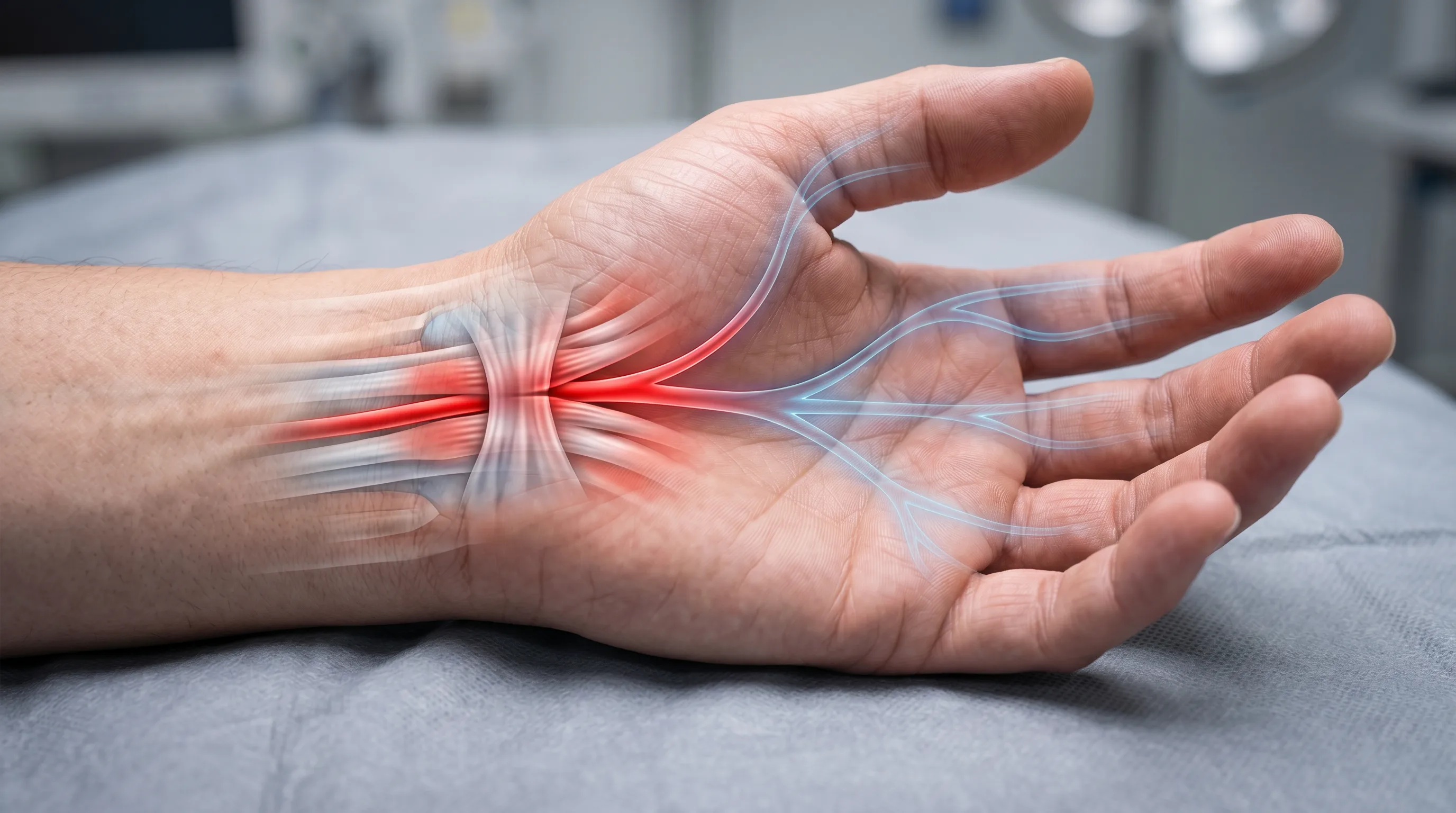
What Is Peripheral Neuropathy?
The peripheral nervous system is the vast communication network connecting your brain and spinal cord to every organ, muscle, and inch of skin in your body. When the nerves in this network are damaged — whether from disease, injury, toxins, or chronic compression — they begin transmitting abnormal signals. Your brain interprets these abnormal signals as pain, even though there may be no acute tissue injury occurring.
Peripheral neuropathy is the umbrella term for this nerve damage and the symptoms it produces. The most characteristic symptom pattern is the "stocking-glove" distribution — symptoms that begin in the feet and hands (the furthest point from the spinal cord, where nerve fibers are longest and most vulnerable) and may gradually extend upward toward the ankles, calves, wrists, and forearms as the condition progresses.
Symptoms of Peripheral Neuropathy
Neuropathic symptoms vary depending on which types of nerve fibers are affected:
- Burning pain — often worse at night; many patients describe it as walking on hot coals or standing on pins
- Electric shock sensations — brief, stabbing jolts that shoot through the foot or hand
- Tingling and pins-and-needles — persistent or episodic, often in the toes and soles of the feet
- Numbness — reduced ability to feel light touch, temperature, or pain, which increases fall risk and the risk of unnoticed foot injuries (particularly dangerous in diabetic patients)
- Allodynia — pain from stimuli that shouldn't be painful, such as the sensation of a bedsheet touching the feet
- Weakness — particularly in the feet (foot drop, difficulty going up stairs) when motor fibers are involved
- Balance and coordination problems — because proprioceptive fibers (which tell your brain where your body is in space) are damaged
Understanding the Causes
Identifying the underlying cause of neuropathy is essential because it guides treatment. The most common causes include:
Diabetes
Diabetic peripheral neuropathy (DPN) is the most prevalent cause of neuropathy in the United States, affecting up to 50% of people with diabetes over time. Chronic elevated blood glucose damages the small blood vessels (microvasculature) that supply peripheral nerves, gradually starving them of oxygen and nutrients. DPN progresses slowly but relentlessly if blood sugar remains uncontrolled. Managing glucose levels is foundational — but it does not reverse established nerve damage, which is why additional therapeutic interventions are needed.
Spinal Nerve Root Compression
Not all neuropathy is caused by metabolic disease. A compressed nerve root at the lumbar spine — from a herniated disc at L4–L5 or L5–S1, or foraminal stenosis — can produce neuropathic symptoms in the leg and foot that closely mimic peripheral neuropathy. This distinction matters enormously because compression-related neuropathy responds very well to spinal decompression treatment, whereas metabolic neuropathy requires a different approach.
Our Digital Motion X-Ray and clinical examination help determine whether a spinal compression component is contributing to your symptoms. If it is, DRX 9000 decompression can directly relieve the nerve root pressure driving the neuropathic pain.
Chemotherapy-Induced Peripheral Neuropathy (CIPN)
Many chemotherapy agents — particularly platinum compounds (cisplatin, oxaliplatin), taxanes (paclitaxel, docetaxel), and vinca alkaloids (vincristine) — are directly toxic to peripheral nerve axons and myelin sheaths. CIPN affects 30–40% of chemotherapy patients and can persist for months to years after treatment completion. It is currently one of the most undertreated side effects of cancer care. Class IV laser therapy (photobiomodulation) has demonstrated encouraging results in clinical research for reducing CIPN severity and promoting nerve repair.
Other Causes
Additional causes include: vitamin B12, B6, thiamine, and folate deficiencies; autoimmune conditions (lupus, rheumatoid arthritis, Sjögren's syndrome); thyroid dysfunction; kidney and liver disease; alcohol-related nerve damage; hereditary neuropathies (Charcot-Marie-Tooth disease); and idiopathic neuropathy (no identifiable cause, found in approximately one-third of cases).
Our Neuropathy Treatment Approach
We take a cause-specific approach to neuropathy treatment, recognizing that no single intervention helps all types. Our evaluation focuses on identifying contributing factors and matching therapies to your specific presentation. We also work collaboratively with your primary care physician, endocrinologist, or neurologist.
Spinal Decompression — for Compression-Related Neuropathy
When neuropathic symptoms in the legs or feet have a spinal origin — compressed nerve roots from disc herniation or stenosis — the DRX 9000 is highly effective. By reducing intradiscal pressure and creating space for the compressed nerve root, decompression can dramatically reduce or resolve the neuropathic symptoms that have been attributed to peripheral nerve disease. Many patients who have been told they have idiopathic neuropathy actually have an overlooked lumbar spine compression component.
Class IV Laser Therapy — for Peripheral Nerve Healing
Class IV laser therapy (photobiomodulation) delivers high-intensity near-infrared and red light energy deep into tissue, where it is absorbed by mitochondria in nerve cells. This triggers a cascade of cellular repair processes: increased ATP production, reduced pro-inflammatory cytokines, promotion of axonal regrowth, and enhanced blood flow to the treated area. Research into photobiomodulation for diabetic neuropathy and CIPN has shown reductions in pain scores and improvements in sensation in several controlled trials. Treatment is completely painless — most patients describe a gentle warmth.
Functional Rehabilitation
Neuropathy affects not only pain perception but also proprioception — the sensory system that tells your brain where your limbs are in space. Damaged proprioception dramatically increases fall risk, which is particularly dangerous in older adults. Our rehabilitation program includes balance training, ankle proprioception exercises, and progressive strengthening of the intrinsic foot muscles and lower leg muscles that compensate for neuropathic sensory loss. These interventions improve functional stability even when the underlying nerve damage cannot be fully reversed.
Nutritional Assessment
Vitamin B12 deficiency is one of the most common and most reversible causes of peripheral neuropathy, yet it is frequently missed. We recommend a review of nutritional status — particularly B12, B6, thiamine, folate, and vitamin D — in all neuropathy patients, and we coordinate with your primary care provider to address any identified deficiencies. This is particularly important for patients on metformin (which reduces B12 absorption) and those following plant-based diets.
Neuropathy treatment outcomes vary significantly depending on the cause, duration, and severity of nerve damage. We provide honest, individualized expectations at your initial consultation. Long-standing, severe neuropathy with significant nerve fiber loss has more limited recovery potential than recent-onset or mild cases. Our goal is always to reduce symptoms meaningfully and improve functional quality of life — even when full reversal is not possible.